

The Stolen Cello by Redi Hasa
Redi Hasa is an Albanian cellist and composer who released a debut record titled The Stolen Cello in 2020, inspired by the story of his life.
In the 1990s, he fled to Italy to escape the civil war in Albania and brought with him the cello he “stole” from the Conservatory of Tirana he was attending when war broke out in 1996; he later returned the instrument, but the idea of a cello saving his life is still alive and kicking in his mind.
Redi Hasa has since settled in Lecce, Southern Italy, plays for the likes of the internationally-renowned pianist Ludovico Einaudi and has managed to reunite his whole family of musicians in Italy.
He is in today for an interview about music and life.
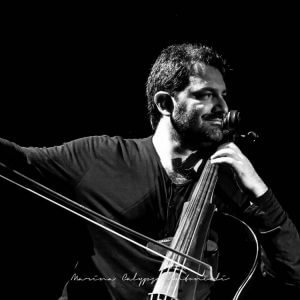
Redi Hasa – ©️ to the owners
Redi, what is the story behind The Stolen Cello?
I was enrolled in the State Conservatory of Tirana in Albania when, in 1996, this terrible civil war broke out. It lasted two or three years, and it was terrifying. All schools and universities were closed, and I couldn’t even take my exams and get my diploma from the Conservatory. The curfew was at 6 p.m., and basically, you’d go out to have a coffee, and you didn’t even know if you were going to make it home safely afterwards. My older brother, who is also a musician, had already moved to Italy by then, and he suggested I follow him, so I could at least finish school. This is what I did, I got a student visa and I moved to Italy with this cello that I had lent by the Conservatory of Tirana and that I couldn’t return because the school was closed. The cello, in a way, kind of saved my life. I was given a scholarship in Italy to pursue my studies, and when the war was over, I headed back to Tirana to return the cello to the Conservatory. They wouldn’t think I’d done anything special, though. They weren’t that impressed, they were just like, “ok, thank you for the cello, goodbye”.
Why did you choose the cello?
I come from a family of musicians and my mother has been teaching the cello for 45 years. She initially tried to teach me how to play the violin, but it went very badly. Her colleagues suggested she’d give up on me; they said I was a disaster, and they were right. All I could think about at the time was playing football. I’d had enough music at home, I wasn’t that interested in music when I was a kid. She insisted a little bit, she had that dream, that vision of me and my brother, who is a pianist, playing together on a stage someday. And eventually, it did happen and today we play together on stage. I also played the bass guitar for a while. When I was in Albania, I’d play in some grunge-alternative punk rock bands that made Balkan music. A lot of musicians experiment with a variety of musical instruments until they find the right one for them; you’ll often start with the piano and the guitar, just to end up playing less common instruments such as the viola, the cello and the saxophone.
What would you recommend to kids who want to become cellists?
To play football! Just kidding – I mean, music is super important, even if you don’t eventually become a professional musician, music is still important because it opens up so many windows in your soul. Music puts you on a certain path and helps you become more empathetic and develop skills that you will use in your everyday life for the rest of your life. It’s important to include music in kids’ education, it’s important to teach music in schools.
Who are your biggest musical influences?
Well, my interest obviously started in classical music, and one of my absolute favourites is Bach. He composed music for the cello as well, and he just created wonderful, gorgeous, incredibly moving compositions that still work perfectly fine in today’s world. He became famous today because his music was included in mobile phone ringtones. See? Bach’s literally everywhere now! I even launched a personal project called Bach is Back, based on musical improvisation, to promote the endless flow of Bach’s music’s transformation and improvisation: we used many different inspirations and sources, from jazz to Baroque music and a polyphony of Balkan voices, and much more. The project was supported by the local authorities in Apulia, Italy, and we also released a DVD. In addition to that, I actually listen to everything. Just everything. I get inspiration from literally every kind of music, from classical to punk rock, to electronic and hardcore, I feed myself every kind of music you can think of.
How about Balkan music?
The main environment for Balkan music is that type of World Music festivals you’ve got all around Europe. Balkan music really works well in World Music festivals. But know what? It’s not the 1970s anymore when you would listen to something new and you’d be shocked and be like “Oh my God, this is amazing”. In music, it’s as if everything has already been said and everything has already been heard by now. In Italy, in particular, there’s currently really nothing new, and it’s kind of weird because when I was studying at the Conservatory, I’d learn everything about Italian classical music, operatic music and so on; and so, Verdi and Puccini are being taught to people all over the world but not really in Italy. Generally speaking, if you look at the current state of things in Italy, it’s just incredible how Italy keeps producing more and more talent; the country is full of talents who are forced to leave their home country because they are given no opportunities to shine. You’ve got enormous difficulties in Italy, and governments are not only not supporting you in any way and not giving you anything, but basically taking from you.
Would you ever move back to Albania?
I would love to, but after more than 20 years living in Italy, that wouldn’t be easy. I feel half and half. All my life is in Italy now, my family is here, my friends are here. Then, obviously, I have chosen to remain in Italy also because I’m pretty close to Albania, it’s just a 45-minute flight from Tirana. From Apulia, where I live, it actually takes less time to reach Tirana than Rome! It’s weird, though, to think that it was just the 1990s when Albanians would escape to Italy on inflatable boats, and not so many years later, you guys are coming to Albania to find work. In Tirana alone, we currently have around 60,000 Italians working and setting up businesses. I think this sort of cultural exchange is unavoidable: our countries are very close, and we feel a bit like “cousins”. I remember that in 1991 we would all reunite at home to watch “Non è la Rai”, that Italian programme with lots of teenage girls singing and dancing. When Non è la Rai was on air, the streets in Tirana were deserted! But well, you know, Albania has lived 45 years of dictatorship during which we weren’t even allowed to watch foreign TV or to listen to foreign radio stations. Still, many of us would build illegal DIY TV antennas to try and catch Italian TV signals and see special events such as the Sanremo Music Festival. We would all secretly reunite in a small room to watch the Sanremo Music Festival together. These are pieces from my childhood, and even though everything was absurd, they are still treasured memories for me. You know, Albania is a beautiful country. The sea is just gorgeous, I can see it from here in Lecce, and I can also see the Albanian mountains from Otranto when it’s not too cloudy. Without a doubt, after all that suffering in the past years, Albania is an emerging economy with loads and loads of young people working hard to make the country bigger and better. Their ideas are, of course, crushing against a wall of old and outdated politics, but they continue to work really hard to make things progress the way they should. Young people in Albania are bringing in a lot of ideas, a melting pot and excitement, they’re launching important companies and organisations in the cultural and musical fields, they’re producing arts and movies, they’re working 24 hours a day to progress, and this is just amazing. Tirana has become a city that never sleeps!

Redi Hasa by ©️ Ray Tarantino
Unless stated otherwise, pictures were provided from Redi Hasa’s private collection © belongs to their respective owners