
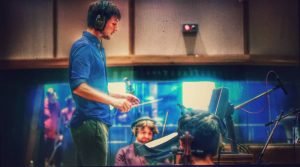
Stefano Fasce by Nathan Small ©
Stefano Fasce is an Italian film score composer who writes mainly for flute and strings and was awarded a Celebrity Online Scholarship from the Berklee College of Music in Boston, US.
He composed music for Sky History‘s documentary Al Murray: Why Does Everyone Hate The English?, for Goathland on Channel 4, and for the movies The Whale Bowl, My Times and Dead Birds, starring Game of Throne‘s star Tara Fitzgerald.
His score for Dear Mr Burton was granted both Best Original Score at the International Sound & Film Music Festival and Best Soundtrack at the White Deer International Film Festival.
In the UK, he was rewarded with a placement in the BFI Network x BAFTA Crew‘s year-long talent development programme to write a new composition for cello, and the release of his 2020 debut solo album titled Solitary Places was made possible thanks to a bursary from the h Club London’s Emerging Creatives Programme.
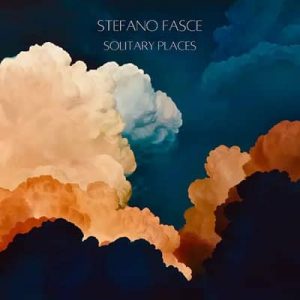
Solitary Places by Stefano Fasce ©
Stefano Fasce‘s debut single Human is something you can’t just stop listening to on repeat.
The first time you hear it, you think, hey, this sounds a bit like Ennio Morricone.
The second time you tell yourself, ok, let’s pay more attention now – and so you try to find out if the track reminds you of something else you heard before, but it doesn’t.
Human is just a marvellous melody.
From the third time on, you just surrender to beauty and find yourself fascinated by the graceful music you’re hearing, and you just want to play it again.
Stefano Fasce composes some of the sweetest-sounding and genuinely beautiful instrumental tracks you’ll hear around, and when he gets an Academy Award someday, you will remember this interview.

Stefano Fasce by Nathan Small ©
Stefano, why did you choose instrumental music instead of pop or rock?
I got into instrumental music and film scores gradually. As a teenager, I was playing in a pop-rock band in Italy, but as things were coming to an end with that project, I started composing my own music, mostly orchestral compositions with a cinematic feeling; this naturally led me to approach film score composition. But I guess the quick answer is that I probably enjoy creating film soundtracks more than making pop or rock music. The variety of the projects and challenges, the teamwork with filmmakers, the music composition itself and the sound range I can choose from means that I find film scores a much more exciting assignment to perform. I think music and images combined can really generate wonderful and powerful outcomes.
Who are your biggest influences in music and life?
Two people in particular have inspired me and made me realise that I could pursue my dream of working both as a concert songwriter and as a film score composer: they are Icelandic multi-instrumentalist and producer Ólafur Arnalds and German-British composer and pianist Max Richter. Looking at what they’ve achieved in life inspired me to aim for an equally fulfilling career, and their influence on my music can be seen in the shift regarding my personal projects, as I went from writing music for symphonic orchestras to composing for smaller ensembles and focusing on melodies, harmonies and textures. Then, you know, I grew up listening to Red Hot Chilli Peppers, so I often wonder what it would be like to write something together with John Frusciante, who also has a separate electronic music project. English singer-songwriter Imogen Heap also does very interesting things. I think I would like to work with someone a little bit distant from my world as this could take us somewhere unexplored and fascinating.
How would you describe your debut album, Solitary Places?
For me, Solitary Places is the beginning of a new journey as an artist and a performer, which goes hand in hand with my career as a screen composer. The album encompasses my background in classical music and my past experiences in electronic and cinematic music. The title originates from a phrase I read in the novel ‘Orlando: A Biography’ by Virginia Woolf, which really caught my attention: “Orlando naturally loved solitary places, vast views, and to feel himself for ever and ever and ever alone”. My work has always been inspired by my travels to many remote places, so I thought Solitary Places was a perfectly matching title for my album. This is a very exciting time for me: as I’m finally free from media boundaries, I can fully express myself, and I hope my work will inspire others and resonate with their feelings.
Which one of your songs are you most attached to?
This is a difficult question. As a film composer, you’re basically told from day one not to get too attached to your music, as your goal is to realise the director’s vision rather than your own. So maybe it doesn’t come as a surprise that Human, the lead single from Solitary Places, is the one I’m most attached to, at this time. That song gives me the perfect balance between the classical and modern influences I aimed for, and it is probably my most representative piece of work as a contemporary classical composer so far.
What was your dream job as a child? Did you have a plan B?
I attended the State Conservatory of Genoa Niccolò Paganini in my hometown in Northern Italy, where I graduated in flute. I also play the guitar and the piano and have been studying the cello for two years. I find the learning process as a sometimes hard but rewarding experience, and the more musical instruments I learn to play, the more I can rely on myself for recording and putting together new ideas appropriately – and in the end, playing is fun! I don’t remember having that strong dream job as a child, but the influence of my family – they are also musicians – led me toward a creative job. To my parents’ regret, I never actually had a plan B, and I don’t think I could live a fulfilling life by doing something other than composing music. I am not sure what I would be doing right now if I wasn’t a musician, I would probably still be in a creative job. I like graphic design, so I would maybe do something involving the arts.
In your opinion, what should be done to make classical and instrumental music more relevant to the general public?
Combining concerts of classical music with more recent musical pieces might probably attract a wider audience. Also, as streaming services are now deciding what’s hot and what’s not, I think creating engaging playlists could bring classical music closer to the people.

Stefano Fasce by Samira Oberberg ©
Unless stated otherwise, pictures were provided from Stefano Fasce’s private collection © belongs to their respective owners